Showing posts with label Home in Flint. Show all posts

The raptor herald


Smack!  The front legs of my chair leave the floor, my hands pop off the laptop keyboard; I jerk backward. A split second, then a tinkling sound ripples over my left shoulder. I turn and look: in the storm window beside me fissures radiate outward as if pushed by an invisible hand.  Something’s struck the plate glass almost dead center.

I’m out the door---scanning the front porch for a clue, but the missile lies farther away.  On the lawn a small hawk rests belly down, tipped onto one shoulder where the wing meets his brown speckled body. He quivers to right himself and then hazards a hesitant, off-kilter walk. A slow taxi to lift off and he’s gone. 

My storm window? The oversized sheet of glass, maybe four foot by five, is one of two that cover twin dining room windows, and probably custom made for my fifties house in Mott Park. With my index finger I trace the cracks from the outer edge of the glass to a tiny pinprick at the center of the pane. Incredibly, no fragments have fallen out.

I called Flint Glass Company (once Koerts Glass on Dort Highway for Flintoids).  Billy, grandson of the owner I knew years ago, drove from Flushing to take down the wood frame.  Two weeks later he returned with the storm window re-glazed and snapped it back into its much-painted metal hinges.  One hinge of the four is missing, but the frame holds.

The hawk event was seven years ago, just about the time I retired.  I think of it now as the herald of my bird watching years.  I’m late to this sublime pleasure. Birder friends have tutored me; maybe my raptor had been a young migrant gone astray?  These folks know the seasonal patterns---the first robin in March, the juncos in winter.  Their feeders attract coveys of fluorescent yellow finches; they sight northern flickers, indigo buntings, real bluebirds.

I marvel at what I have missed.

I grew up in northern California where my eyes were fixed on the ground, the clay, rock and brown grass of summertime. Our house was on a hillside and we had few neighbors.  I paid attention to gopher snakes and garter snakes.  Rattlesnakes turned up some years (we didn’t talk about climate change then).  As a kid of seven or eight, I knew to look where I stepped.

I remember the nodding heads of California quail and grating screech of the western blue jays that everyone called mean, but what were the little birds they bullied? No idea.  An owl roosted in a crooked pine tree outside the bedroom windows, a comfort to me at night. It sounded something like a Great Horned owl, so I’ve ascertained online, six decades later. https://www.allaboutbirds.org/guide/Great_Horned_Owl/sounds    

My hometown, Mill Valley, was lucky to have a passionate nature educator named Elizabeth Terwilliger. She promoted love of nature for sixty years and her environmental activism preserved many local sites.  In her broadbrimmed sun hat, “Mrs. T.” visited grade schools and led field trips to awaken kids’ interest in nature.  Generations of school children learned about the birds, marshlands, and butterflies of Marin County. https://www.marinmagazine.com/elizabeth-terwilliger/

But by sixth grade I was transferred to a Catholic school where I learned French and poetry and not about nature. Decades later when my son was crazy about dinosaurs and together we practiced pronouncing their names, I somehow I missed their evolutionary connection to birds. Archaeopteryx, missing link between birds and reptiles, lost out to Tyrannosaurus rex.  

My partner, Dennis, once an avid hunter of dove in the California desert and wild turkey in Missouri woods, is now a bird watcher. Hunting taught him about dove, our most frequent birds, and he explains their ground feeding and roosting habits to me. Driving the expressway in Michigan he notes the woods and thickets that must be full of turkeys.

I have Stan Tekiela’s The Birds of Michigan field guide, a first edition bought at Young and Welshans twenty years ago for my mother, then newly transplanted to Flint from the west coast. I watched her shriek in 80-year old delight when she spotted a northern cardinal on the backyard shed in the snow. A few years later, bedridden and in hospice care, she could see birds flutter at feeders; we watched together when she could no longer speak.  

Birds of Michigan organizes species by color, a system of “mostly” black, “mostly” brown, and “mostly” blue.  At first the term “mostly” reassured me, but I grew baffled by the number of dun-colored females that turn up in different sections.

I moved online and found the Cornell Ornithological Labs with its chart of bird silhouettes and learned the first identification step: size and shape. The robin is both a kind of thrush and a handy gauge of size (“is it larger or smaller than a robin?”)  Clicking on the few species I know, I learned that tits and titmice are grouped with chickadees, that the cardinal is a kind of finch, that blue jays are related to crows, and that the starlings that carpet the lawn after a rain belong with blackbirds like the red winged blackbird, grackle, and brown-headed cowbirds.

The Cornell site confirmed that a young broad-winged hawk probably hit my window, perhaps gone astray from his kin or “kettle,” en route to Canada in spring.  The mailman on my street, Nick, hails from Alaska; he knows about birds and wildlife and alerts the neighborhood Facebook page when he sights bald eagles that soar above the Mott Park Recreation Area (https://mpraa.net/).

Summer mornings I wake to the sounds of bird song.  I pour wild finch seed into an old terra cotta saucer on the ledge of my front porch.  The quiet, routine task allows my last pre-conscious dream life to filter into the beginning of the day.  The birds are small and plump, and I recognize them now as black capped chickadees. They don’t look like they need my cheap seed, but I cherish the peaceful satisfaction their feeding brings me.   

The birds swoop in and land in a clump, then squeak and shove until four or five feed at a time.  Those that don’t make it to the saucer busy themselves on the ledge with the seeds the victorious ones scatter.  A squabbling rotation with chest puffery and fluttering wings and the first feeders dart off and a new set of three or four wedges in. When the seed is mostly gone, a single outlier bird hops into the center of the saucer and picks at the powder and hulls remaining.

I bought a tubular finch feeder and the variety of birds has picked up. Red winged blackbirds and  downy woodpeckers try their luck at the small holes. Next door, a rusted old TV arial never dismantled by an aging neighbor attracts birds at 32 feet. In the evening a large woodpecker drums on its hollow metal poles like an avian head-banger.

Neighborhood cats prowl. The first was Ralphie, a hefty marmalade-colored veteran with yellow eyes placed a bit too close together. Confident in his weight and age, he’d lumber along the perimeter of my backyard lawn in that cautious way of cats, wary of open space.  Not needing the food of nature, he still practiced the habits of his species. Since Ralphie’s family moved away, a young, lean tiger-stripe appears on my porch in the morning.  Eyes fixed on the finch tube, he stretches his body upward, gauging the distance to the feeder.  He once succeeded; I found the feathers.   

Backyard bird feeding is a modern pastime, dating in America from Thoreau who scattered old corn to see what animals would appear outside his hut at Walden Pond in 1845. The first Audubon society appeared in 1895 and ardent bird lovers crusaded against the use of feathers in belle epoque hat wear.  Commercial bird feeders were marketed in the 1920s and field guides like Audubon and Peterson appeared in the 1930s linking amateur enthusiasts with ornithologists.

With the postwar housing boom new generations gained a lawn to mow, a yard to garden, and birdseed in the grocery store. In 2001, the United States Fish and Wildlife Service calculated that some 52 million Americans feed birds. https://onlinelibrary.wiley.com/doi/full/10.1111/j.1472-4642.2007.00439.x

But the environmental movement that emerged in the 1960s and 1970s has schooled us in the potential negative, even disastrous, effects human activity can bring to the planet and all its life. Our interaction with nature cannot be neutral. Current studies consider how supplementary feeding affects bird species. (https://www.nature.com/articles/s41467-019-10111-5). 

Each evening I shake out the hulls in the saucer and

unhook
 the finch feeder, usually overdue for cleaning---

every two weeks is the guideline.
  In summer twilight, days

before the solstice, birdsong rises on the west side of the

house, piercing the warm living room air even when the TV

blares at prime time. The urgency of the birds’ calls alerts me

to the end of day; sometimes I hear a kind of panic in their

sounds.


This essay originally appeared in East Village Magazine, April 2019.


A year in blight


On Father’s Day, Sunday June 19, 2016, NBC 25 aired a local news segment that showed a group of Mott Park residents as they cleared brush, cut dangling branches, boarded up windows, and mowed overgrown grass at a vacant house in the neighborhood.  Six volunteers, including an eager three-year-old helper named Jack, worked fast in the bright, increasingly hot, sunlight because one Mott Park resident, Bobbi Wray, put out a call to friends asking for help to clean up a vacant house next to her on Marquette street.

A crew came together organized by Steven Major, Mott Park resident for the last seven years and reserve officer for City of Flint Police. Home Depot and the neighborhood association donated materials and friends loaned tools.  When TV 25 reporter Miranda Parnell asked why, Steve said, “We’ve just had enough.”

The Mott Park’s Blight Squad had burst on the scene.

Bobbi Wray, retired tv5 reporter (and the first female TV reporter in Michigan) recounts a backstory all too common.  Sometime in 2011, her neighbors---a couple in their sixties---got underwater on their mortgage and were unable to take out a second to finance roof repairs.  Finally, in desperation, they left and the house reverted to bank ownership, a warning notice later tacked on its storm door that indicated the property belonged to “M & M Mortgage Services.”

Clean-up of more properties followed the first June action and the group adopted the Blight Squad name for their Facebook page and Steve Major became its director, working closely with the Mott Park Neighborhood Association.  The core Squad members drove the neighborhood, checked properties, reached out to neighborhood residents through the MPNA Facebook page, and gathered leads on addresses showing evidence of squatters.  Donations came---bags and compost from the Genesee County Land Bank “Clean and Green” program and paint from a neighborhood owner of a paint store. Neighbors loaned tools and brought cases of water, leaf bags, and work gloves wherever Facebook announced the crew was working.

During one late August 2016 clean-up a 1945 Chevrolet coupe made in Chevy-in the-Hole Flint was found covered under brush---the paint in fair condition protected by overgrowth.  Online research showed it was a Fleetline AeroSedan, one of Chevrolet’s first vehicles when it returned to civilian carmaking.  Other vehicles have been found, but sadly, less interesting. 


Meantime, the Mott Park Neighborhood Association worked closely with Kettering University and Tom Wyatt, project manager of “Renew the Avenue,” a Department of Justice program whose Byrne Grant reduces crime by engaging the community (currently Stevenson Neighborhood, Mott Park, Sunset Village/Glendale Hills) to decrease blight.  Byrne grant funds helped provide tools, board up materials, and motion-activated LED solar security lights. Kettering University has provided student workers as well.

Toward the end of the 2016 and with a dozen properties cleaned up, the Blight Squad began to decide strategically where to work.  They found a target at the triangle of Perry, Woodbridge, and Joliet streets meet---a small cluster of old commercial buildings whose renovation could have a big impact.


Online research showed that the three buildings had once been the Woodbridge Market, a Plumbers’ Union, and a Pure Oil station (including building plans). Steve dubbed the site the Mott Park “Historic Business District.”  The middle structure, the Woodbridge Market, turned out to have an owner who decided to refurbish the building himself.

The buildings on each side of the old market were the Plumbers’ Union (the initials “J.B. CO” embedded in its façade) and the Pure Oil building.

The exterior for Pure Oil was “English Cottage” style, one of the first company attempts at a chain look for gas stations.  At present, with the exterior renovation nearly done, the neighborhood association plans to purchase the Plumbers’ Union building.  The Pure Oil building is slated as studio space for Mott Park resident and artist Ryan Gregory.

After the “Historic Business District” clean up, the Blight Squad did small jobs, often illegal dumping, but with the approach of fall weather a new challenge emerged: squatters.  A gruesome knifing incident occurred in late August in one squatters’ house in a row derelict structures on Chevrolet near the Flushing Road intersection. The squatters were cleared and the houses boarded up in early winter. 

By the end of December 2016, ABC12 and NBC25 had aired four news reports about the Blight Squad’s efforts. Over the winter into 2017, their work changed. The Blight Squad adopted a off-season pattern: assess now and then secure, install security lighting, and decide how to maintain.  Tom Wyatt’s “Renew the Avenue” at Kettering University supplied wood for board ups, four cordless drills and the loan of a generator---essential where power has been cut.  The Blight Squad could obtain security lighting, purchased in bulk and tax-free. Winter work was a combination of networking with local groups and organizations and board ups.

In early January 2017 a group of sixteen people, Blight Squad members and others, met at Kettering University to plan for the coming summer season.  Now at the close of March, their plans for the first large-scale spring project are underway. The target?  Joliet street which runs from Kettering University at Dupont to Blair St. deep into the interior of Mott Park.  Sunday, March 26, a Blight Squad crew began the clean-up of one burned out property on Joliet.  Wall remnants were knocked down, concrete blocks heaved into the basement, and charred wood and debris loaded into a 20-foot dumpster.  NBC 25 and ABC 12 stopped by to film the day’s crew that included Eric Bumbalough, Steve Major and son Kenny, Tony Coleman, Bo Cummins, Greg Harmon, Bobbi Wray, Chad Schlosser, Joe Shingledecker, Tony Coleman, and Rashonda Magee from Flint Urban Safety Corps. Rain cut the work day short; a squatters’ house next door to the burned site will be cleaned out and boarded up later. 

Posted on Facebook, full-scale plans for Joliet St. announce work dates for April 15 and May 13 when the Blight Squad will lead teams comprised of Bahá’í youth volunteers, Kettering students, new Flint Police Reserve Officers, Flint Urban Safety Corps, and Joliet Street residents.  Teams will work the full length of the street according to task---clear brush, clear trash, mow, and board-up.  An equipment and materials station will be positioned at the at the center of the long street. The last squatter home will be boarded up.  Steve Major expects 50 to 100 volunteers.  

The good news for summer of 2017 is that a program of AmeriCorps, the Flint Urban Safety Corps, (a partnership between Genesee County United Way and UM-Flint)), will be in Mott Park working on clean-up and board-up. In Flint on a three-year program, the Urban Safety Corps works in a residential swath extending from University Avenue to McLaren hospital.  Their clean-up of the Stevenson Neighborhood  has just ended and according to Tom Wyatt, “Renew the Avenue” Project Manager (headquartered at Kettering) “the results are positive---a 25% reduction in violent crime and a 51% reduction in property crime.[i]  

Steve Major explains that the Urban Safety Corps will help recruit Blight Squad members, seek donations of perennial plants for roadway medians, especially Chevrolet Avenue, patrol the streets picking up trash, and seek funding for increased lighting and camera systems in the park and recreation area.  A long, ambitious list, but the Corps will allow the Blight Squad shift gears and concentrate on ridding the area of graffiti and maintaining cleaned properties.

And the maintenance challenge is substantial.  About 60 vacant properties need solar security lighting installed; their front yards will be seeded with “alternative lawns” (ground cover like a white clover perennial used by the Land Bank) that reduces mowing and watering.  Rototillers can be rented at Flint’s Neighborhood Engagement Hub Tool Shed.

Blight Squad Enforcement is now in effect in Mott Park.  Two uniformed safety officers work with Flint Police to monitor residential code enforcement in the neighborhood.  As Steve puts it, now the Mott Park “ship needs to be tightened.”

As houses have gone derelict, graffiti or tagging has boomed.  The Blight Squad goal is to paint over all tagging as quickly as possible. Alert to the geographical pattern of tagging, the Blight Squad monitors the movement of gang-type activity in Mott Park.  Several Blight Squad participants have formed the Mott Park Public Safety team to patrol the neighborhood during late night hours.  They alert police to break ins, count windows out, and check for squatters.  Summer will bring an uptick in this work---more street activity, more people outside late at night. 

Summertime also brings problem houses, technically termed “nuisance houses.”  Last summer, the Blight Squad and the Mott Park Neighborhood Association worked with Kettering and neighborhood police officers to monitor a property on Frank St.  A record of complaints, police calls, and neighbors’ phone videos led to action with the Neighborhood Association able to notify the owner that the residence has been listed as a nuisance house and civil action will be taken.  What seemed to be a “party house” was in fact an “illegal rave.”  Eventually the renter was arrested.

Deep and pervasive social and economic problems form the bedrock of residential deterioration. According to Realtor.com, the burned-out house on Joliet was built in 1920.  Zillow lists March 2015 as the last date it sold---$3,500.00 Rental companies, many from out of state, buy up such properties. Renters need economical housing, but few are able---for whatever reason---to maintain properties as home owners.   Mott Park, once a middle-class district, today is struggling for its life.   

Is the Blight Squad ready for another year of struggle?  Steve Major says “the work is like household chores.  You dread doing it, but you see that you must.  You work as a team and the camaraderie is great.  After it’s done we feel good, even if we are exhausted.”  

At the March 26th clean up I asked Blight Squad veteran and seven-year Mott Park resident Bo Cummins how he felt after a year of doing this work.  He says, “This is like a disease on the body---you have to attack it wherever it turns up. Am I discouraged?  No, I love this. When I don’t do anything---that’s discouraging.” 

Steve Major is optimistic too.  “Do I think we can save the neighborhood?  Questions come, sometimes I feel like we are losing the battle.  My wife tells me that’s just because now I know more about what was always there.  Recently, power at the Plumbers’ Union building went out and there was a break in.  We have to go back and re-do the work.  But the City is more responsive to our neighborhood now.  The culture in Mott Park has improved, the Facebook posts are more positive.” 


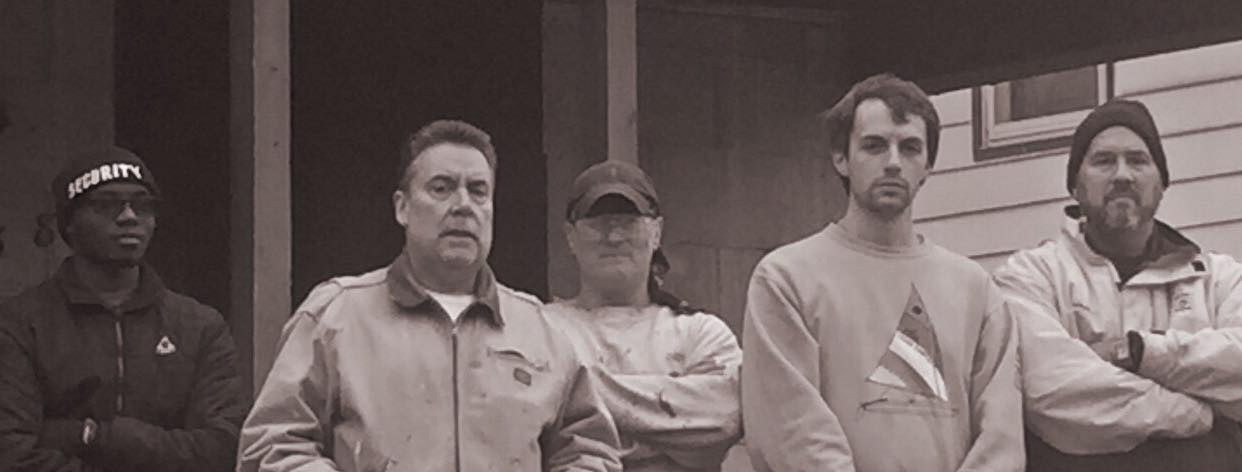
Today the Blight Squad is part of Mott Park life, maybe even its beating heart. Other organs---the Neighborhood Association and the Mott Park Recreation Area are healthy and functioning.  But the heart is special; residents are enormously proud of the Squad’s work. Each time photos of a newly cleaned up property are posted on Facebook, neighbors pour out their gratitude and admiration. The Blight Squad Facebook banner photo (taken by Steve’s son, Kenny) is a black and white shot that has a “noir” quality about it.  Men with determined expressions and crossed arms as if to say---as Steve said at that first clean up back in June 2016---“We’ve just had enough.”


If readers are interested in donating to the work of the Blight Squad, the Mott Park Neighborhood Association website provides a link where contributions earmarked for the Blight Squad can be made. More information? You can reach the Blight Squad by email mpblightsquad@gmail.com


[i] Data from Michigan State Police who capture all Flint Police Department data.  Michigan State Police provides data to CORE Community ComStat, a group of law enforcement agencies and security groups who meet monthly to review area crime statistics. 

For more essays go to East Village Magazine online at http://www.eastvillagemagazine.org

Feeling a little subprime


After the financial crisis of 2008 and the revelation that subprime mortgages were involved in the bubble, commentators intoned that we’ve just gone too far in America with everyone wanting to own their own home. This utter folly was attributed to (among others) George W. Bush.


When he came into office in 2002 he promoted an “ownership society” where owning a home would give people a stake in society.(1) Attractive to minorities, lucrative for big donors to the Republican Party and feasible for Wall Street under lax regulation, this was a “win-win” vision.


Then, lo! The financial debacle hit and exposed mortgage-backed securities — tranches of mortgages, bundles of bad loans to the highly unqualified new buyers. The shady subprime world was revealed.(2)


I’ve been following this drama. It’s infinitely more complex, riddled with arcane phrases and acronyms, packed with factors besides bad mortgages. Nothing rivets me to the TV screen like an interview with economists like Joseph Stiglitz or Paul Krugman. Or better yet, someone I can understand, like Sheila Bair.(3) And don’t get me started on the movies — Too Big to Fail, Margin Call or Inside Job.


I have a stake in this topic because I own a house that I love more than it’s worth. My love has grown as the market value has declined. It’s a healthy house from head to toe — with a new roof and a dry basement. Large windows face the sunrise. In its backyard I’ve learned how to grow roses that bloom from June to November.


In good weather my mother read for peaceful hours on its front porch, observed the school bus schedule, noted who got FedEx deliveries. And the house has a congenial setting — a neighborhood.


I’m new to the neighborhood idea. As a kid I lived on the hillsides of northern California. Only a few houses were visible. It was an unincorporated area, outside the city limits. Nobody lived “next door.” We had volunteer fire departments, septic tanks, dirt and gravel roads and sometimes in the summer, a random rattlesnake that a German Swiss neighbor killed with a shovel.


When you saw a neighbor, it was an emergency — for example, a finger severed with a scythe.


Later, I lived in a big city, on the top floor of a high-rise apartment building. I learned the nuances of nods and mumbles, the social forms appropriate to the elevator and the hallway.


After that, on Main Street in a small town. Everyone minded your business, knew what you bought at the local IGA, observed what you wore to church and commented on how you raised your kid. It seemed ingrown and insufferable.


Then, by accident, I came to live in Mott Park. But I didn’t understand its real value until the mortgage crisis of 2008.


The first Mott Park homes were built in 1921 along Flushing and Bagley streets. For the next decade houses went up along Frank, Dickinson and Monteith, then Altoona and Thomas. By 1933, private developers built Mott Park’s remaining homes, including those along Nolen Drive where the houses are larger and more architecturally complex and are situated on picturesque sites along the Flint River across from the Mott Park Golf Course.


Developers marketed these homes to the city’s elite by placing ads in society magazines. Varied building styles, curvilinear streets, public parks and many trees made the area attractive. Urban planning researchers have called Mott Park “a cornerstone American neighborhood community that represents the American dream.”(4)


Photos and reminiscences record this mid-20th century neighborhood in its heyday. Compiled by two former neighborhood residents, The Mott Park Chronicles shows happy 1950s families and children on the sidewalks going to nearby schools.(5) There’d be family car in the driveway (probably a Buick). It was a lifestyle of pride in ownership of a home that lasted several decades — precisely the years of President Bush’s youth.


When I bought a house in the neighborhood in 1995, the Fifties afterglow was still palpable, even though Flint had suffered in the decades-long decline of the auto industry. Now, 11 years later, in the wake of the 2008 mortgage and financial crisis, sharper signs of hardship mingle with new values and new ways.


Homeowners who could afford (and chose) to leave the neighborhood have moved away. Some left for typical reasons. Older folks retire. Even the dogs they used to walk die. Younger couples want better schools or more bedrooms as the kids grow up.


Others have left because of the unaddressed issues with crime and decline in safety enforcement. And still others were unable to keep their homes for financial reasons and simply abandoned them, increasing the number of vacant homes drastically.


On my walks I see that a house is suddenly empty. Through the glass of uncovered windows, rooms at the back of the house are visible. One week all seems normal. The next, people are just gone. How long did these people deliberate before decamping? Perhaps months of desperation were not visible to the Sunday walker.


Meantime, landlords looking to make a quick dollar and out-of-state investment companies have bought up homes in the neighborhood.


Already in 2008, 53 percent of homes were owned by investment companies, 29 percent were real estate owned and 16 percent were privately owned. Of those investors, 22 percent were out-of-state companies, 21 percent located in Michigan, 27 percent in Genesee County, 23 percent in Flint and 6 percent in Mott Park.(6)


My expectations have adjusted to reality. Fewer traditional property owners live here. New people live in a different world than those for whom these houses were built or the first generation of homeowners that followed them. New residents surely enjoy the freedom, fresh air and green expanses that still decent houses in a fairly good neighborhood provide.


But what former apartment dweller moves in with a lawnmower? The yard around the house, the paint and repairs are probably not the renters’ responsibility. Landlords do the minimum, often less. If people are buying on land contract, they can make payments, but not much more.


My unscientific calculation is that a single-family dwelling occupied by renters can last about two years before external decline becomes pronounced. A vacant house goes in a year. And some edges of the Mott Park neighborhood have gone beyond reclaiming.


A Genesee County Land Bank assessment charts the changing status of the neighborhood’s housing stock. A color-coded map of parcels rates the houses as good (rose), fair (pink), poor (violet), or structurally deficient (red).(7) You can see which properties the Land Bank owns and where the tax foreclosures are.(8)


I’m over the shock of the changes, visual ones mostly, and the loss of property value. I’ve discovered something else that seems to matter more. It’s tied to the neighborhood, just a bunch of people all in the same residential life boat. They have grit, like the workers who first lived in Mott Park. The Neighborhood Association is indefatigable. Its members trek on.


For five years or more, members have conducted monthly recycling that raises money to repair the park playground and patch the asphalt on the tennis courts. Volunteers hang new nets and repair fencing. Gardeners plant the neighborhood’s flower beds.


Another neighborhood group has incorporated as the Golf Course Association, a nonprofit to seek grants to maintain the golf course. A small grant funded a “neat street” project where residents adopt a street to keep free of trash. Joining Genesee County’s Little Free Libraries, Mott Park residents constructed four little libraries for kids in the neighborhood.(9)


In October about 30 volunteers from Kettering University, Calvary United Methodist and Mott Park residents joined forces to clean up the alleys behind Joliet and Chevrolet, as well as Bagley, Perry, Dupont and the surrounding areas. The Flint sanitation division helped by picking up an enormous trash pile.


The neighborhood’s Facebook page that holds all these efforts together shows how creative and energetic these neighborhood people are. Many are young, new to the neighborhood, and they have children.


When I drive through other distinctive neighborhoods in Flint, I’m amazed at how solid they still seem, those larger and more imposing houses of the College and Cultural Center or Woodcroft. My eye is canny, however. I know how much change can be hidden. Friends in those neighborhoods worry too.


The mortgage and financial crisis of 2008 on top of two decades of urban collapse has affected all Flint neighborhoods. As for Mott Park, the year 2019 will mark the centennial of its founding, of a historic commitment to the workers of America’s automotive industry. That industry and its workers are mostly gone, but much of their housing survives.


And the people in those homes are not subprime at all. 


­–––––––––––––


(1) Jo Becker, Sheryl Gay Stolberg and Stephen Labaton, “Bush drive for home ownership fueled housing bubble,” New York Times, December 21, 2008.


(2) After a two-year investigation by the Senate Permanent Subcommittee on Investigation, their report, Wall Street and the Financial Crisis: Anatomy of a Financial Collapse, was released in April 2011. It’s a free download on Kindle.


(3) Chairperson of the Federal Deposit Insurance Corporation (FDIC), 2006-2011.


(4) “Reclaiming the Neighborhood: Addressing Vacant Homes in Mott Park”. Prepared by Tara AuBuchon & Krista Trout-Edwards, University of Michigan Urban and Regional Planning. May 2009. As cited in Susan Burhans, “Mott Park Neighborhood Stabilization Plan,” Oct. 2, 2012.


(5) Cathy Snyder, ed. Mott Park Chronicles. The Story of an American Neighborhood. Historic Photos and Memories of Life in Flint, Michigan, 1908-2009 (Grand Blanc, MI: Grand Blanc Printing Company, 2009).


(6) Vacant Properties Survey; June – August 2008; City of Flint Assessor’s web site (Aug. 31, 2008), as cited in Susan Burhans, “Mott Park Neighborhood Stabilization Plan” [working document], Oct. 2, 2012.


(7) Genesee County Land Bank, Mott Park Housing Condition Assessment 2012, Nov. 7, 2012.


(8) The Land Bank owns five properties in Mott Park: two have been completed rehabbed; two have rehab in progress, and one is a pending sale. Buyers just need to qualify for a mortgage. The payments are cheaper than rent. See http://www.thelandbank.org/ Accessed Nov. 2, 2012. The Land Bank was established in 2002 after a 1999 Michigan tax law change.


Read more essays like this in East Village Magazine at http://www.eastvillagemagazine.org/

Animal Life


Smack!  The spindly legs of the chair I’m sitting on seem to leave the floor; my hands pop up from the laptop keyboard. Crackling echoes somewhere in a ceiling corner above me.  A split second and a time lapse tinkling cascades over my right shoulder. I turn and see: the large pane of storm window shatters from the center, lines and fissures radiating outward as if pushed by invisible fingers of an invisible hand. Something’s hit the plate glass almost dead center.  It’s a big, oversized pane, maybe four foot by five.  Custom made for this Fifties house.


Out on the lawn a broad winged hawk rests at a slight angle, momentarily stunned.  Now he begins a hesitant, off-kilter walk. Then a slow taxi to lift off.  He’s gone.     


It’s been quite a year for animal life.  A neighbor says he’s spotted a blue heron in a marshy area in the old golf course.  Earlier this spring three turkeys appeared in my back yard.  I look out the bathroom window to see their springy necks rhythmically extending and collapsing like a multicolored slinky.  They startle and dart into the corner of the chain link fence, not having enough runway to get airborne.  They regroup and try again, barely clearing the jagged fence top.


Small birds are regulars, of course.  They eat year round and flutter in the birdbaths until November. Cardinals, finches, house sparrows, chickadees. Blue jays swoop in, imperious, all tail feathers and ass. Woodpeckers find their insects in the decaying trunks of trees that in better times the city forestry department would have tagged for removal.   The goldfinches like to eat upside down, says my friend Jan.  Her heavily trafficked finch feeder is in the College and Cultural Center neighborhood.  The residential enclave of academics.  Here specialists in the humanities and social sciences hold forth authoritatively about birds and rodents.  Their expertise results in whole blocks overrun by squirrels and birds, happy to have found a chemical-free zone of failed natural remedies for domestic pests. It’s a haven where tortured birds are lovingly pried free from the jaws of bored family cats. The nature-loving politics of liberals.


Over in my neighborhood, Mott Park, the summer drama has been what Mitt Romney with uneasy jocularity once called varmints. Returning from a month long vacation, I was puzzled to see a large mound of newly dug earth next to the back side of the garage. Its powdery light tan the tell-tale sign of recent activity.  And just beyond the pile a hole about a foot in diameter.  Sipping coffee on the back steps next morning I was momentarily stunned when I saw the creature.  A ground hog---and bigger than Ralphie, the twenty-pound orange Persian cat from up the block.  For several days I tracked the new creature’s habits.  Out early in the morning or at twilight, it scuds along the low retaining wall, and then drops into low bushes behind my neighbor’s statue of St. Francis. Religion---the last refuge of scoundrels.

Friends were not surprised.  ONe wh lives down in Carriage Town uses catch and release traps: "Havahart." Except I didn't have the heart.  Web research brought up remedies both murderous and encouraging of animal re-direction.  The first category involved the attachment of hosing to the car exhaust pipe and putting the hose down the groundhog tunnel.  A gas chamber for even these animals was appalling  This left only the natural remedies: a plastic pop bottle filled with ammonia and the cap pierced with holes to let out the fumes, Epsom salts sprinkled alongt he critters' pathway, a pound of moth balls rolled down the hole.  

In the midst of my research thriving pups appeared.  My neighbor Kyle drawled: yeah, get a .22. I didn't feel up to the rifle.  

Later in the summer, Kyle was dividing phlox for me on the front side of the garage.  A groundhog came up from underneath---evidently it had burrowed all the way across from the back side of the garage. When he told me about it, I asked Kyle what he did.  He said it involved a shovel and I should leave it at that.  The phlox flourish.


The ground hogs have disappeared from my backyard burrow. Now it’s early fall; they may have gone to a winter burrow elsewhere.  I learned of their two-abode life style online as well. Neighbors across the street report still seeing them, usually in familial multiples. 


Meantime, Ralphie lumbers along between the back yards, his quotidian ritual. He patrols the perimeters of the grass in that cautious way of cats, avoiding open space in the center, his marmalade leonine face and yellow eyes set in patient concentration.   


Animal drama’s over for now.  By the first of March someone on the neighborhood Facebook page will be asking if anyone’s seen a robin yet.   By mid-March it will be the Flushing Walleye Festival.  And I’ll be checking my yard for burrows.

Read more essays like this one at
http://eastvillagemagazine.org/


Conversations with my house, revised and continued

A year or so ago I was thinking once again about my house as a chapter in my life gradually approaching a close. Our relationship was changing: each year I move closer to retirement and selling the property and moving on. A poignancy had crept into our conversations. I have always loved the layout of the house, its coved ceilings, the views of the golf course through the windows, its airy and open position on a corner lot. This house taught me about the capacity of the right real estate to frame possibilities for a changing family--- a newly single mother, a teenage son, an aging grandmother, a dog. And at one point a visiting Doberman who did not do stairs. The arrangement of its rooms had enabled three people to invent a new life successfully.

When my partner Dennis was here that October he replaced the screen doors with glass for winter. The last tomatoes were picked and the plants pulled up. He hosed the gutters clean and our high school helper Grant raked leaves to the street for city cleanup. All the annual fall tasks, the rhythm of the last ten years. But I knew then that things were not the same between us, the house and I. After Dennis left, my relationship with the house did not return to its slightly bittersweet equilibrium. The mortgage crisis had disturbed our formerly philosophic dialogue. My side of the conversation grew querulous. How will this house sell in a depressed Flint market a few years from now? Reproaches about market value loss had replaced gratitude for shelter and security. The house stopped talking.

In other times in America, in other centuries and other countries, people lived in houses for generations. Tragedy often struck and families sold off goods and furnishings until finally the house would have to be sold to a new owner. In a final, sacrificial service and now a shell of former self, a house would generate cash to pay its owner’s debts. The colonial mansions of Jefferson, Washington, and Madison went through this process until restoration societies could salvage them. Memoirs and autobiography, novels and drama often convey the connections between human life and houses. Psychologically and metaphorically the house has been understood as an analogy for the self and human relations. In The Poetics of Space, Gaston Bachelard described the fortitude of the house which anchors us in the swirl of the universe.

How can the value of a good house be measured?

The mortgage crisis has advanced since the fall of 2008 when these ruminations began. Those fortunate enough to still have their homes have gone bi-polar, lurching between dismay at drops in home values and hope for floors or plateaus so that at least we’d know we are at the bottom. The federal incentives have hit snags. The mortgage modification options have not been implemented well by the Great Lenders. Unemployment now causes mortgage defaults, pushing more properties on to the market.

Meantime I began to size up the condition of my conversation partner and to list the repairs: roof, garage door, basement walls, yard. The list was not what I would do, of course. Parallel to the column of tasks were the names of those who had always worked on the house before, back in the duplicitous days when our real interest lay in marketable improvements---“updates,” as realtors say. Maintenance was an irritation.

Ron the builder, Tim for heating and plumbing, Bill the glass man, Big Dan the tree man, Lewis the painter---a roll call of repairmen. Flipping through an old rolodex it appears that about a third of my Flint social life is connected to house maintenance. My house has been kept together by friends. They were respectful. My house provided them work and displayed their talents. Each noisy, dusty day of a project brought hoots of amazement or humor at finding out how things were constructed sixty years ago when the house was built. Or disdain at previous owners’ cheap and un-workmanlike fixes. I’d be called upon to make decisions about the quality of materials to purchase or the cost of extra hours of labor to do it right. Extended deliberations ensued.

One summer my mother, then about 85, set herself up on the front porch with a novel and the New York Times while eaves troughs were spread around the lawn, scrubbed and repainted. The dog slept under her chair, my son went off to friends, I went to work; everyone was happy. That was over ten years ago. The mortgage crisis makes it seem so far away.

After a winter of sulking and silence, my house unresponsive, I galvanized myself this past spring. I returned to the rolodex, got some estimates, and then a surprise. A new friend for the house turned up---Kyle, the part-time landscaper. He’s from the neighborhood association on Facebook. By late summer he’d laid out a new plan for the front entrance with hardscape design and shrubs. Long deliberations about which plants to choose, trips to the nurseries and the gravel yard. This time Dennis sat on the front porch; about 5 o’clock the beer came out. Everyone was happy.

The house is talking to me again, our conversations have resumed. The house has taught me something again, this time about flexibility and imagination in hard times. Oh, and our philosophic dialogue reminds me that I’ve found a man who likes house repair.

Read this essay and others at The East Village Magazine, http://www.eastvillagemagazine.org/

No pawnshops for old stories

I turn the key in the lock and gaze distractedly through the lowest pane of the back door window. A slight but unaccustomed disorder in the dining room.  Chairs at an oblique angle to the table, the rug somewhat crooked.  Now that I’ve walked in, why are the winter draft rolls in the middle of the room?  The hall door to the upstairs unaccountably open?  No one seems to be here, but I feel a sense of someone having rushed by rapidly.  I call out my son’s name questioningly---the only other person with a house key and who might enter at any time.  Maybe an emergency search for tools or auto parts still socked away in attic and garage.  And then it hits me; someone else has been in my house. 
I stare hypnotized at details not yet part of a picture, like a gawker at a highway accident. Treading carefully through my own house as if not to disturb it more, I move from the dining room, through the hall to the bedroom.  Why are the dresser drawers open, underwear and socks rising like yeasty bread dough overflowing the sides of a baking pan.  Of course:  this is where ladies’ loot might be tucked into little private places, or nestled in sateen-lined boxes with lids that snap shut, or laid out in the efficient squares and rectangles of the burgundy faux felt compartments that organize everything. 
On top of the mahogany dresser sits the pottery dish where the jewelry most a part of me was dropped each night---empty.   Pearl earrings received at college graduation, my dad’s signet ring, a watch fob from my grandfather made into a pendant.  What else had been there just hours ago? Each piece was bound to a family story.  Everything was old, laden with memories.  Only this morning everything had been tangled in the dish, linking my life to those now dead but daily remembered.
I reach out but can’t touch the disarray, its surfaces tender like a wound. I retrace my steps and exit, but this time through the front door.  I need to tell someone that my things are gone, grabbed in haste by someone who did not know them. I stride with purpose across the street, ring my neighbor’s bell, and blurt out my distress.  She and her daughter are more alarmed; could someone still be in the house?  We call the police there and then return to my house.  A kind of post mortem begins, though the body is gone. 
The next morning I sit at the dining room table, trying to list the missing items, to describe their shapes, name their materials, and estimate their ages. Their identities derive from their history. In my grandfather’s time, gentlemen wore stick pins and had monogrammed watch fobs; they carried small penknives, engraved with their initials, relatively useless but indicative of elegance. One stickpin had been made into a ring for my mother and a watch fob had been mounted as a pendant.  New sorrows emerge as lost pieces come to mind that I hadn’t remembered initially.
Unlike princes and warriors of the ancient world, we are not buried with our treasure; it is handed down. My grandmother and mother would give me some small piece for an important birthday, a coming of age gift. Closing the tale of a ring or pin I admired, they would say, “You may have this when you are older.”  And so it was that the story melded to the object.  A ring or a bracelet marked the passage from childhood, to adolescence, to graduation, to marriage. Small pieces just lay in the drawer, waiting perhaps for another young girl to grow into them.
The household insurance did not cover these losses; I had not lost enough, it seemed.  The agent needed valuations in the thousands. The city police station sergeant, impatient and patronizing, had much more serious, life and death issues in his office distant from the front desk.  I should just leave my list of items with the somnolent officer behind the cage.  In any case, the goods were probably long since out of the area, on their way to Detroit.  Pawnshops might help---although they aren’t supposed to deal with hot goods--- but I could take my list around to them. 
Steeled by loss, I set off for the local pawnshops, remembering their locations out of disdain and now fearful in their parking lots.  Weaving through dusty tunnels of tools and tvs at the entrance, I make my way to the back and the jewelry counter.   The clerks vary.  One takes my list to the backroom, perhaps smokes a cigarette and returns: “no descriptions match.”  Another, more conversational, confides that he has so much jewelry in the back safe that every three weeks some of the stuff is just shipped off to be melted down.  Once chosen with care, engraved, presented as gifts marking important occasions, my family jewelry might return eventually to its original state.  A fate more appalling than theft.  Sold at market price, re-cast into ingots, my family jewelry could simply revert to its elemental state and re-join the world supply of precious metal.  
A neighbor tried to console me with urban lore.  Every once in a while, a local drug bust turns up a cache of stolen jewelry.  The stuff never makes it to pawn at all.  Dealers hoard it, give it to favored women; the goods are traded internally. Just hang in and wait.      
It’s been several years now since the break in. From time to time, I stop in at the pawn shops in town, following clerks’ advice that the stock in the cases changes every few months. I’ m almost a regular. Now comfortable, I slowly walk the cases.  Bending over the glass, I see bracelets and necklaces, mostly gold, their designs clichéd and rarely distinctive; perhaps their lack of originality makes them easy to move on the pawn market.  Twelve to fourteen feet of wedding ring sets arrayed in rows, the rank and file of failure.   Engagement rings with sad, small stones; the purchaser could afford little, but wanted to be proper.  The recipient was thrilled at the new stage of life this tiny diamond signified.  But now through disappointment or desperation it’s in pawn along with the wedding band.  Sadder stories than my own.
Some of my losses I can still visualize quite clearly, their color, engraving, detailed filigree, or how a ring felt on my finger. Thinking of the objects fondly, I wish that I could tell their stories to the new possessors---it’s the stories that can still pierce my chest.  Other losses I’ve forgotten.  No longer a young girl anticipating the occasions of adult life that they marked, I wait to pass down what is left.  With their stories, of course; that’s the most important part.  
See also http://www.eastvillagemagazine.org/

April Drama: the Tulip Tree


It’s really a saucer magnolia, magnolia x soulangeana, or tulip tree, or Japanese magnolia. This year in Flint they bloomed the last week in April, flamboyant and glorious when all other trees are still bare. Only the willows have begun to look like yellow-green spaghettini. One discussion in Flint this spring concerns community gardens: volunteers plant in the vacant spaces left from demolished houses close to downtown. Their empty rectangles rapidly greening in early spring reveal the outline of century-old landscaping. Dogwood pokes through vines and brambles marking the perimeter of a city lot where a house once stood. Although the old houses were multi-storied, the average city lot in the early twentieth century was small by today's standards. Ideal for planting.
By the first of May the Flint magnolias are past their best; the petals are falling and their glory is fading. They still overwhelm the weeping cherry, a more delicate and thoughtful tree, prissy when pruned into umbrellas. Here and there dense clusters of deep magenta poke through---crabapple? Near Hurley Hospital tulips stand erect and optimistic in front of an empty house, the red and yellow bulbs that have returned are large; someone tended the beds around the foundation not too long ago. Now the metal siding hangs askew, peeled back. Faux brick siding shows underneath, an earlier attempt at modernization to cover wood and avoid painting. They've survived another winter, these hulks of houses with their flaking paint, vandalized metal siding, cracked steps, sagging screens.

Urban decay now appears in the context of mortgage crisis. Commentators intone that we’ve gone too far with everyone wanting to own their own house, with becoming a nation of homeowners. What utter folly; we should have been renting all along.
My parents and their friends in the early 1950s were very tired of renting. During the Depression and then in wartime they had moved a lot. Family businesses were lost; colleges closed their doors when tuition could not be paid. They moved from hometown to jobs---and grateful to have them---elsewhere in the state or the country, to a navy port or army base, lucky when taken in by a relative on one of the coasts. Always room for another relative or friend in three-story houses like those now being demolished in Flint. Pillar to post, they said. “We met new people from all over the country, we lived in walk-ups with Murphy beds, not enough room to swing a cat, went roller skating on dates, dined for a few dollars in North Beach---wine included.”

After the war, what was there to go back to? A small town banker took a chance on a mortgage for a veteran. And so it began: decades of gardening, slow improvements---from septic tank to sewer, concrete steps poured with a neighbor, a room added on. No furniture and hardly any light (so it seems in the old photos), but enough space to raise a child and bring impoverished grandparents to live with them. I saw my grandmother's social security card recently; she and my invalid grandfather were saved by a postwar house. Those old Flint houses, many on their way to demolition, deserve respect. They did service to generations in their day; the least we could give their plots is a nice garden.

Green tomato relish and an unexpected anniversary: November 14


It is five years this November since Dennis and I met, or more accurately collided, through the efforts of good friends, Jan and Ted. Each of them liked each of us; why not put us together and then there would be four where there had only been two? This idea which I had last encountered as a high school senior now seemed---at late middle age---wise and sophisticated. There might be some hesitancy and humor at the beginning, but the underlying logic would carry the day. There we would be, Dennis and I, compatible together as two with our compatible friends which makes four.

Not so. I was deputized by Jan to pick up Ted and Dennis at the Flint airport; the guys were arriving in late afternoon from Los Angeles, flying in for a long weekend to celebrate Jan’s birthday cum housewarming party. Unlike their grade school counterparts, grown-up birthday parties can be attached to mature events (buying a house). They are still attended, however, by 90 percent friends and 10 percent people your mother made you invite (former spouses, difficult co-workers, people whose party you attended). Useful too for social engineering.
Having driven the men to Jan’s house (which is also Ted’s Flint home), I returned home to change clothes, check on my mother, and then re-appear at the party. By the time I arrived, the birthday revelers were in full swing, warming the house from wall to wall. People sitting on the stairs, smokers banished to the basement, Motown and ZZ Top in the living room, university administrators and deans amid younger faculty dressed in their grad school best. Dennis found me, we talked a bit, and then not knowing anymore what to do than I had in high school, I dived into shop talk with favorite colleagues while Dennis made time with a beautiful woman sitting on the stairs.

The rest of the evening is lost to legend. Dennis needed to buy a bottle of Bushmills as a birthday gift; we left the party to shop, decided to go by my house for him to meet my mother, and finally return to the party. The conclusion of the evening has now merged with a dinner later that weekend and a long talk at The Torch (Flint’s oldest and smokiest hangout). Dennis won me over with his total ease, his humor and funny stories of his family’s past, his courtesy and kindness. We communicated daily on email for the next four months until I arrived with Jan in Los Angeles in February of 2004. A new life had begun; it’s now the only one I know and it’s full of amazing joy. Like Dennis here in our Michigan kitchen. He is making tomato relish out of the last green tomatoes left on the vines before winter of 2008. We should label the bottles “Happy Anniversary.”

Moon over Obama


Election night, Dennis and I sat on the front porch waiting for east coast returns to come in. Dennis had voted absentee; panicked by forecasts of long lines, I had gone down to the City Clerk’s office and voted at 8 am Wednesday, October 29th. Here is the moon over Flint, Michigan, just before 8 pm November 4, 2008.
It’s November 6 now and still warm. Unseasonably balmy weather in the 70s began just before Halloween and continued through Election Day until now. The weather pundits have forecast a return to normal by tomorrow, Friday, and certainly by the weekend. It will drop twenty degrees and we'll return to rain and the general ramp up to winter. For friends in the Flint community the warmth seems to be an additional sign of grace at the close of this election season. My neighborhood election efforts began in August when my neighbors James and Sharon hosted an Obama open house. A slender field worker named Erin, no more than 20 years old, energetically hit her talking points; she had taken a semester off from college in New Hampshire to work for the campaign. We signed in and provided our phone numbers and emails on a list that evening of not more than 10 names. Later, in October, I found my way to the downtown headquarters. A vacant building in defunct Windmill Place, a 1980s center of shops and eateries that had failed by 1990, provided space for “Campaign for Change.” Beneath homemade signs “We are the Change” and oblivious to the dusty cement floor and dirty windows, they worked at laptops and phones, doing data entry late at night. Fed and housed by local Democrats from August to November, they worked in one of the ruins of the local Flint economy. They had answered a call like the one I remember with first with John Kennedy and then with the anti-war movement. Erin must have returned east now; her cell phone number here no longer works. I'll call Sharon to see if there's an address for Erin, some destination for my thanks to her and everyone who gave part of their lives to this campaign.

The raptor herald

Smack!   The front legs of my chair leave the floor, my hands pop off the laptop keyboard; I jerk backward. A split second, then a tinkli...