Showing posts with label Mott Park neighborhood. Show all posts

A year in blight


On Father’s Day, Sunday June 19, 2016, NBC 25 aired a local news segment that showed a group of Mott Park residents as they cleared brush, cut dangling branches, boarded up windows, and mowed overgrown grass at a vacant house in the neighborhood.  Six volunteers, including an eager three-year-old helper named Jack, worked fast in the bright, increasingly hot, sunlight because one Mott Park resident, Bobbi Wray, put out a call to friends asking for help to clean up a vacant house next to her on Marquette street.

A crew came together organized by Steven Major, Mott Park resident for the last seven years and reserve officer for City of Flint Police. Home Depot and the neighborhood association donated materials and friends loaned tools.  When TV 25 reporter Miranda Parnell asked why, Steve said, “We’ve just had enough.”

The Mott Park’s Blight Squad had burst on the scene.

Bobbi Wray, retired tv5 reporter (and the first female TV reporter in Michigan) recounts a backstory all too common.  Sometime in 2011, her neighbors---a couple in their sixties---got underwater on their mortgage and were unable to take out a second to finance roof repairs.  Finally, in desperation, they left and the house reverted to bank ownership, a warning notice later tacked on its storm door that indicated the property belonged to “M & M Mortgage Services.”

Clean-up of more properties followed the first June action and the group adopted the Blight Squad name for their Facebook page and Steve Major became its director, working closely with the Mott Park Neighborhood Association.  The core Squad members drove the neighborhood, checked properties, reached out to neighborhood residents through the MPNA Facebook page, and gathered leads on addresses showing evidence of squatters.  Donations came---bags and compost from the Genesee County Land Bank “Clean and Green” program and paint from a neighborhood owner of a paint store. Neighbors loaned tools and brought cases of water, leaf bags, and work gloves wherever Facebook announced the crew was working.

During one late August 2016 clean-up a 1945 Chevrolet coupe made in Chevy-in the-Hole Flint was found covered under brush---the paint in fair condition protected by overgrowth.  Online research showed it was a Fleetline AeroSedan, one of Chevrolet’s first vehicles when it returned to civilian carmaking.  Other vehicles have been found, but sadly, less interesting. 


Meantime, the Mott Park Neighborhood Association worked closely with Kettering University and Tom Wyatt, project manager of “Renew the Avenue,” a Department of Justice program whose Byrne Grant reduces crime by engaging the community (currently Stevenson Neighborhood, Mott Park, Sunset Village/Glendale Hills) to decrease blight.  Byrne grant funds helped provide tools, board up materials, and motion-activated LED solar security lights. Kettering University has provided student workers as well.

Toward the end of the 2016 and with a dozen properties cleaned up, the Blight Squad began to decide strategically where to work.  They found a target at the triangle of Perry, Woodbridge, and Joliet streets meet---a small cluster of old commercial buildings whose renovation could have a big impact.


Online research showed that the three buildings had once been the Woodbridge Market, a Plumbers’ Union, and a Pure Oil station (including building plans). Steve dubbed the site the Mott Park “Historic Business District.”  The middle structure, the Woodbridge Market, turned out to have an owner who decided to refurbish the building himself.

The buildings on each side of the old market were the Plumbers’ Union (the initials “J.B. CO” embedded in its façade) and the Pure Oil building.

The exterior for Pure Oil was “English Cottage” style, one of the first company attempts at a chain look for gas stations.  At present, with the exterior renovation nearly done, the neighborhood association plans to purchase the Plumbers’ Union building.  The Pure Oil building is slated as studio space for Mott Park resident and artist Ryan Gregory.

After the “Historic Business District” clean up, the Blight Squad did small jobs, often illegal dumping, but with the approach of fall weather a new challenge emerged: squatters.  A gruesome knifing incident occurred in late August in one squatters’ house in a row derelict structures on Chevrolet near the Flushing Road intersection. The squatters were cleared and the houses boarded up in early winter. 

By the end of December 2016, ABC12 and NBC25 had aired four news reports about the Blight Squad’s efforts. Over the winter into 2017, their work changed. The Blight Squad adopted a off-season pattern: assess now and then secure, install security lighting, and decide how to maintain.  Tom Wyatt’s “Renew the Avenue” at Kettering University supplied wood for board ups, four cordless drills and the loan of a generator---essential where power has been cut.  The Blight Squad could obtain security lighting, purchased in bulk and tax-free. Winter work was a combination of networking with local groups and organizations and board ups.

In early January 2017 a group of sixteen people, Blight Squad members and others, met at Kettering University to plan for the coming summer season.  Now at the close of March, their plans for the first large-scale spring project are underway. The target?  Joliet street which runs from Kettering University at Dupont to Blair St. deep into the interior of Mott Park.  Sunday, March 26, a Blight Squad crew began the clean-up of one burned out property on Joliet.  Wall remnants were knocked down, concrete blocks heaved into the basement, and charred wood and debris loaded into a 20-foot dumpster.  NBC 25 and ABC 12 stopped by to film the day’s crew that included Eric Bumbalough, Steve Major and son Kenny, Tony Coleman, Bo Cummins, Greg Harmon, Bobbi Wray, Chad Schlosser, Joe Shingledecker, Tony Coleman, and Rashonda Magee from Flint Urban Safety Corps. Rain cut the work day short; a squatters’ house next door to the burned site will be cleaned out and boarded up later. 

Posted on Facebook, full-scale plans for Joliet St. announce work dates for April 15 and May 13 when the Blight Squad will lead teams comprised of Bahá’í youth volunteers, Kettering students, new Flint Police Reserve Officers, Flint Urban Safety Corps, and Joliet Street residents.  Teams will work the full length of the street according to task---clear brush, clear trash, mow, and board-up.  An equipment and materials station will be positioned at the at the center of the long street. The last squatter home will be boarded up.  Steve Major expects 50 to 100 volunteers.  

The good news for summer of 2017 is that a program of AmeriCorps, the Flint Urban Safety Corps, (a partnership between Genesee County United Way and UM-Flint)), will be in Mott Park working on clean-up and board-up. In Flint on a three-year program, the Urban Safety Corps works in a residential swath extending from University Avenue to McLaren hospital.  Their clean-up of the Stevenson Neighborhood  has just ended and according to Tom Wyatt, “Renew the Avenue” Project Manager (headquartered at Kettering) “the results are positive---a 25% reduction in violent crime and a 51% reduction in property crime.[i]  

Steve Major explains that the Urban Safety Corps will help recruit Blight Squad members, seek donations of perennial plants for roadway medians, especially Chevrolet Avenue, patrol the streets picking up trash, and seek funding for increased lighting and camera systems in the park and recreation area.  A long, ambitious list, but the Corps will allow the Blight Squad shift gears and concentrate on ridding the area of graffiti and maintaining cleaned properties.

And the maintenance challenge is substantial.  About 60 vacant properties need solar security lighting installed; their front yards will be seeded with “alternative lawns” (ground cover like a white clover perennial used by the Land Bank) that reduces mowing and watering.  Rototillers can be rented at Flint’s Neighborhood Engagement Hub Tool Shed.

Blight Squad Enforcement is now in effect in Mott Park.  Two uniformed safety officers work with Flint Police to monitor residential code enforcement in the neighborhood.  As Steve puts it, now the Mott Park “ship needs to be tightened.”

As houses have gone derelict, graffiti or tagging has boomed.  The Blight Squad goal is to paint over all tagging as quickly as possible. Alert to the geographical pattern of tagging, the Blight Squad monitors the movement of gang-type activity in Mott Park.  Several Blight Squad participants have formed the Mott Park Public Safety team to patrol the neighborhood during late night hours.  They alert police to break ins, count windows out, and check for squatters.  Summer will bring an uptick in this work---more street activity, more people outside late at night. 

Summertime also brings problem houses, technically termed “nuisance houses.”  Last summer, the Blight Squad and the Mott Park Neighborhood Association worked with Kettering and neighborhood police officers to monitor a property on Frank St.  A record of complaints, police calls, and neighbors’ phone videos led to action with the Neighborhood Association able to notify the owner that the residence has been listed as a nuisance house and civil action will be taken.  What seemed to be a “party house” was in fact an “illegal rave.”  Eventually the renter was arrested.

Deep and pervasive social and economic problems form the bedrock of residential deterioration. According to Realtor.com, the burned-out house on Joliet was built in 1920.  Zillow lists March 2015 as the last date it sold---$3,500.00 Rental companies, many from out of state, buy up such properties. Renters need economical housing, but few are able---for whatever reason---to maintain properties as home owners.   Mott Park, once a middle-class district, today is struggling for its life.   

Is the Blight Squad ready for another year of struggle?  Steve Major says “the work is like household chores.  You dread doing it, but you see that you must.  You work as a team and the camaraderie is great.  After it’s done we feel good, even if we are exhausted.”  

At the March 26th clean up I asked Blight Squad veteran and seven-year Mott Park resident Bo Cummins how he felt after a year of doing this work.  He says, “This is like a disease on the body---you have to attack it wherever it turns up. Am I discouraged?  No, I love this. When I don’t do anything---that’s discouraging.” 

Steve Major is optimistic too.  “Do I think we can save the neighborhood?  Questions come, sometimes I feel like we are losing the battle.  My wife tells me that’s just because now I know more about what was always there.  Recently, power at the Plumbers’ Union building went out and there was a break in.  We have to go back and re-do the work.  But the City is more responsive to our neighborhood now.  The culture in Mott Park has improved, the Facebook posts are more positive.” 


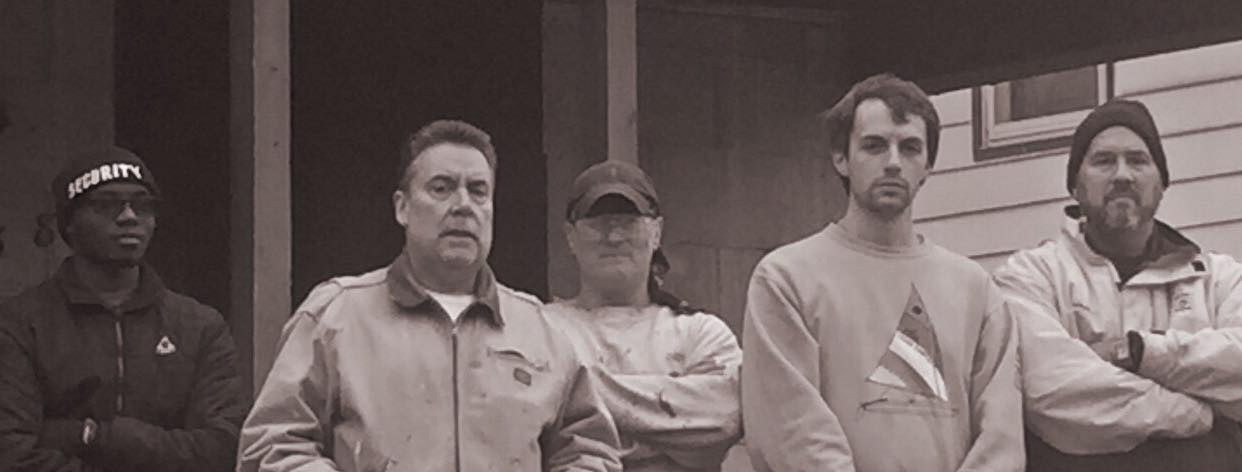
Today the Blight Squad is part of Mott Park life, maybe even its beating heart. Other organs---the Neighborhood Association and the Mott Park Recreation Area are healthy and functioning.  But the heart is special; residents are enormously proud of the Squad’s work. Each time photos of a newly cleaned up property are posted on Facebook, neighbors pour out their gratitude and admiration. The Blight Squad Facebook banner photo (taken by Steve’s son, Kenny) is a black and white shot that has a “noir” quality about it.  Men with determined expressions and crossed arms as if to say---as Steve said at that first clean up back in June 2016---“We’ve just had enough.”


If readers are interested in donating to the work of the Blight Squad, the Mott Park Neighborhood Association website provides a link where contributions earmarked for the Blight Squad can be made. More information? You can reach the Blight Squad by email mpblightsquad@gmail.com


[i] Data from Michigan State Police who capture all Flint Police Department data.  Michigan State Police provides data to CORE Community ComStat, a group of law enforcement agencies and security groups who meet monthly to review area crime statistics. 

For more essays go to East Village Magazine online at http://www.eastvillagemagazine.org

Gardening Season 2015


The trees are leafless sticks but the mottled grass grows greener every morning.  Birdsong pierces the gray light of 4 am.  By 7 am robins and starlings bob and poke on the grass.  Chipping sparrows, song sparrows, and common finches swoop across the hypotenuse from the porch eaves to living room gables.  High in the bare branches cardinals chortle and tilt their heads as if to hear better.

It’s April. 

I’ve packed away my 10,000 lux light therapy device, my shield and buckler against winter depression. Bulbs have straggled up, never as bountiful as the Dutch promise.  No matter; I’m on to Burpee’s now.   Gardening season has finally come. 

Time to peek under the crumbling corners of the Styrofoam cones that cover the backyard roses and see if any tiny green leaves have sprouted on the canes. I will scrape back the remaining straw that covers two raised beds and learn how the strawberries have fared.

Then comes serious inventory, clinical assessment.  I will troop the yard and inspect, imaginary clipboard in hand---the gardener’s triage.  I will note the dead, the reviving, the remotely hopeful. Treading the damp grass my feet sink unevenly when I cross a mole runway beneath.  Summer struggles with scalopus aquaticus ahead.  A non-protected mammal and formidable opponent.

Gardening knits my Mott Park neighborhood together.  April is the month our master gardener, Ginny Braun, buys seed geraniums that volunteers will plant in May in the four neighborhood flower beds.

The neighborhood honors gardeners and gardening.  Every summer Mott Park applauds the prettiest garden and the most improved garden each with a $100 award.  We have so many new neighbors---renters, leaseholders, land contract residents. I want to tell them put a geranium in a pot and we love you.  You could win for most improved garden.

Meantime, we old-timers garden to please ourselves.  We revive our spirits with gardening, nourish our bodies with something fresh out of our own ground, even if the carrots are oddly shaped, the lettuce bears teeth marks, or the abundant kale proved bitter.  Gardening connects us with life. 

And with history. I read once that Louis XIV worked on building and garden projects for Versailles to the day he died at age seventy-seven.  Warfare, diplomacy, and domination of Europe for la gloire of seventeenth-century France?  A mere sidebar to his real passion---building and landscaping.  Gardens were outdoor rooms, integral to architecture.  The tarnished panes of silvered glass in the Hall of Mirrors look shabby today, but the regiments of trees and shrubs and splotches of color within the hedged gardens are still breathtaking.

In eighteenth-century America, gentlemen farmers envisioned a republic where endless land promised a self-sufficient agrarian future. In Founding Gardeners, author Andrea Wulf documents the life-long interest of Washington, Adams, Jefferson, and Madison in crops and gardening.  Founding a successful republic entailed laying out its boundaries and planting it to advance public and personal goals. Not by accident were George Washington and Thomas Jefferson land surveyors. Their daily concerns included species and crops for the new land they were settling (having wrested it from native peoples who merely foraged it).  They warded off invasion and drafted a constitution while they wrote home to their estate managers about what to have planted. Their agrarian idyll rested on slave labor, the contradiction that would undo it.

In the 1890s American magnates built edifices to wealth attained otherwise---in transportation, industry, and finance. They erected enormous homes imitating European styles and crammed their rooms with furnishings ordered from abroad.  The Vanderbilt brothers, Cornelius II and George W. , hired landscape architects to plan the gardens of their estates.  But Gilded Age ostentation sank with the Titanic.  You can visit the Newport mansions and Biltmore House if you can manage hours of viewing imitative styles.  The real value?  The rare trees and shrubs imported for The Breakers in Newport and the thousands of native azaleas gathered for the Biltmore gardens.  

And here we are---ordinary folk with our yards and gardens.  My next door neighbor is Italian.  Gardening seems to come naturally to Carmie.  She tears ivy off the brick walls and tosses the vines onto an old bedsheet spread out on the ground. Then she tips the sheet into the big paper bags for garden trash. Grass cuttings and fall leaves get the same treatment.

In the late afternoon we water our back yards and talk through the chain link fence.  Carmie’s father was a gardener who grew tomatoes. He built things too.  One year she had a garage sale to clear out stuff from her parents; I eyed a low table, painted white, and two small push brooms.  All looked homemade.  One of her sons carried the table over to my garage---though small, it was heavy in the way of handmade things. Too many braces for the legs, too many nails, but indestructible.  I stack my garden tools on the handiwork of an Italian gardener.  

Carmie takes a walk in the afternoon, when it’s not too cold---the village pattern of generations. On summer Sundays the family gathers at her place, offspring and their offspring, and sometimes a dog. If there’s a birthday, there are more cars and it’s noisier.  I love it.  Laughter and some of the talk drifts my way as I fertilize the roses in my back yard.   When the men sit outside on the deck, they sometimes call out in my direction.  “Hey, don’t worry about our shouting---we’re just having a good time.”  I shout back that they are a joy to hear.  Swear your socks off.  Have another beer.  It’s beautiful. 

And it’s all just beginning in April.


2013 in my Neighborhood


It’s end of the year time---you know, time for the year in review, lists and retrospectives. So I thought I’d check in with my favorite topic for hand-wringing: real estate.
Last year, in November 2012, I wrote an essay about Mott Park where I contrasted the calamitous real estate decline with the pleasures of an energetic neighborhood community.  [“Feeling a little subprime” at http://www.eastvillagemagazine.org/en/essays5/18749-essay-feeling-a-little-subprime].
 
An NPR blog in late October alerted me.  The national real estate picture has improved---measured by home prices through the first half of the year 2013. August 2013 was better than August 2012.  According to economist David Blitzer, Chairman of the Index Committee, S&P Dow Jones Indices, the
monthly percentage changes for the 20-city composite show the peak rate of gain in home prices was last April [ . . . ].  Since then home prices continued to rise, but at a slower pace each month. This month [October 2013] 16 cities reported smaller gains in August compared to July. Recent increases in mortgage rates and fewer mortgage applications are two factors in these shifts.
Detroit is in that 20-city composite list.  So is Las Vegas.  Two cities, one old and one new, with enormous real estate problems. If you like charts, see https://www.spice-indices.com/idpfiles/spice-assets/resources/public/documents/53129_cshomeprice-release-0924.pdf?force_download=true.

So how is my neighborhood, Mott Park, doing?

 “It’s true, the real estate market has improved over all, but while prices are still on the rise, there has been some slowing in the pace,” says my neighbor Ginny. 

A realtor with decades of experience, Ginny has sold a lot of real estate, both in Mott Park and throughout Genesee County.  She knows her stuff. We met on Sunday walks in the neighborhood. Organized by real runners, the Sunday walks get some of us less fit off the couch for an hour or so.  I pulled out some old track pants and got new shoes.  Some walkers take pictures for the neighborhood Facebook page.  Others pick up litter as we go. We learned how to roll plastic grocery bags so small and tight we could carry dozens in our parka pockets for litter pick up.  It is ground level struggle with neighborhood decline.

Ginny says the Mott Park real estate market is getting a little better, but slowly.  Foreclosures continue, but are fewer than before. Prices in the neighborhood have risen slightly.  And sales are moving faster.  

But it’s Genesee County that really looks better.  The average sale price is up---15 to 16 percent at the end of October 2013.  Real estate charts on Grand Blanc, Goodrich, or the fabulous Fenton are trending upward.  Areas with better school districts than city of Flint can be cautiously optimistic.  Genesee County has 31 school districts; buyers have choices.  

Mott Park loses in the school district sweepstakes, although it has two excellent private elementary schools: the Catholic St. John Vianney and St. Paul Lutheran. Ironically, families from better city neighborhoods drive their kids in.  

And another irony. This slowly rising market can mean frustration for buyers with cash in hand seeking to close on a bargain.  Banks calculate that it’s in their interest to move slowly and wait for the market to rise.  So short sale approvals remain in limbo; details about the sale pass from one asset manager to another, each supposedly checking some aspect of the sale.  Buyers wait and wait.

“It’s like the ‘Circumlocution Office’,” says Ginny. “You know, in Little Dorrit on Masterpiece.”  Little Dorrit is a Dickens skewer job on the economics and social safety net of Victorian England.   Two families illustrate who has fallen victim in the market place and who has profited.  The Dorrit family languishes in debtors’ prison; the Clenham family hoards a fortune made in textile imports.  Amy Dorrit (“Little Dorrit”) struggles with her father’s fate in prison---only a windfall gift can buy his freedom.  Arthur Clenham, scion of his family wealth, seeks to pay old Dorrit’s debt.  Arthur inquires at the Circumlocution Office about what Mr. Dorrit’s debt is. But the Circumlocution Office never answers any question directly.  Kind of like the banks.

As of mid-December, 17 properties in Mott Park are bank-owned.

Nevertheless, over sixty properties sold in Mott Park in 2013; a lot of movement in the ‘hood.  The picture is mixed. Buyers can be absentee landlords---uninterested, unscrupulous. Picking up properties sold as a package. But some are local investors, even neighborhood residents. A young couple on my block bought the house next door, provided a rental for an old buddy and guaranteed upkeep of the parcel next to them.  Good for summertime parties too. 

Renters are a mixed picture. Some are transient, bringing socio-economic challenges for Mott Park.   Others join the neighborhood Facebook page.  Their needs---from furniture, appliances, and children’s clothes to a Christmas tree---are shared on the page. They look for rentals for friends, post alerts about job openings, say farewell when they move out of state for work.     

The indefatigable Neighborhood Association elected new officers in December 2013, all women and two are new to the neighborhood.   A separate non-profit golf course group maintains the clubhouse and gets the course grass mowed in summer. Neighborhood gardeners maintain the flowerbeds.  In last year’s essay I concluded that despite the real estate challenges, the neighborhood was worth my living there.  

I still think so and I’m ready for 2014 in Mott Park.

Read more essays like this one in East Village Magazine at http://eastvillagemagazine.org/


Feeling a little subprime


After the financial crisis of 2008 and the revelation that subprime mortgages were involved in the bubble, commentators intoned that we’ve just gone too far in America with everyone wanting to own their own home. This utter folly was attributed to (among others) George W. Bush.


When he came into office in 2002 he promoted an “ownership society” where owning a home would give people a stake in society.(1) Attractive to minorities, lucrative for big donors to the Republican Party and feasible for Wall Street under lax regulation, this was a “win-win” vision.


Then, lo! The financial debacle hit and exposed mortgage-backed securities — tranches of mortgages, bundles of bad loans to the highly unqualified new buyers. The shady subprime world was revealed.(2)


I’ve been following this drama. It’s infinitely more complex, riddled with arcane phrases and acronyms, packed with factors besides bad mortgages. Nothing rivets me to the TV screen like an interview with economists like Joseph Stiglitz or Paul Krugman. Or better yet, someone I can understand, like Sheila Bair.(3) And don’t get me started on the movies — Too Big to Fail, Margin Call or Inside Job.


I have a stake in this topic because I own a house that I love more than it’s worth. My love has grown as the market value has declined. It’s a healthy house from head to toe — with a new roof and a dry basement. Large windows face the sunrise. In its backyard I’ve learned how to grow roses that bloom from June to November.


In good weather my mother read for peaceful hours on its front porch, observed the school bus schedule, noted who got FedEx deliveries. And the house has a congenial setting — a neighborhood.


I’m new to the neighborhood idea. As a kid I lived on the hillsides of northern California. Only a few houses were visible. It was an unincorporated area, outside the city limits. Nobody lived “next door.” We had volunteer fire departments, septic tanks, dirt and gravel roads and sometimes in the summer, a random rattlesnake that a German Swiss neighbor killed with a shovel.


When you saw a neighbor, it was an emergency — for example, a finger severed with a scythe.


Later, I lived in a big city, on the top floor of a high-rise apartment building. I learned the nuances of nods and mumbles, the social forms appropriate to the elevator and the hallway.


After that, on Main Street in a small town. Everyone minded your business, knew what you bought at the local IGA, observed what you wore to church and commented on how you raised your kid. It seemed ingrown and insufferable.


Then, by accident, I came to live in Mott Park. But I didn’t understand its real value until the mortgage crisis of 2008.


The first Mott Park homes were built in 1921 along Flushing and Bagley streets. For the next decade houses went up along Frank, Dickinson and Monteith, then Altoona and Thomas. By 1933, private developers built Mott Park’s remaining homes, including those along Nolen Drive where the houses are larger and more architecturally complex and are situated on picturesque sites along the Flint River across from the Mott Park Golf Course.


Developers marketed these homes to the city’s elite by placing ads in society magazines. Varied building styles, curvilinear streets, public parks and many trees made the area attractive. Urban planning researchers have called Mott Park “a cornerstone American neighborhood community that represents the American dream.”(4)


Photos and reminiscences record this mid-20th century neighborhood in its heyday. Compiled by two former neighborhood residents, The Mott Park Chronicles shows happy 1950s families and children on the sidewalks going to nearby schools.(5) There’d be family car in the driveway (probably a Buick). It was a lifestyle of pride in ownership of a home that lasted several decades — precisely the years of President Bush’s youth.


When I bought a house in the neighborhood in 1995, the Fifties afterglow was still palpable, even though Flint had suffered in the decades-long decline of the auto industry. Now, 11 years later, in the wake of the 2008 mortgage and financial crisis, sharper signs of hardship mingle with new values and new ways.


Homeowners who could afford (and chose) to leave the neighborhood have moved away. Some left for typical reasons. Older folks retire. Even the dogs they used to walk die. Younger couples want better schools or more bedrooms as the kids grow up.


Others have left because of the unaddressed issues with crime and decline in safety enforcement. And still others were unable to keep their homes for financial reasons and simply abandoned them, increasing the number of vacant homes drastically.


On my walks I see that a house is suddenly empty. Through the glass of uncovered windows, rooms at the back of the house are visible. One week all seems normal. The next, people are just gone. How long did these people deliberate before decamping? Perhaps months of desperation were not visible to the Sunday walker.


Meantime, landlords looking to make a quick dollar and out-of-state investment companies have bought up homes in the neighborhood.


Already in 2008, 53 percent of homes were owned by investment companies, 29 percent were real estate owned and 16 percent were privately owned. Of those investors, 22 percent were out-of-state companies, 21 percent located in Michigan, 27 percent in Genesee County, 23 percent in Flint and 6 percent in Mott Park.(6)


My expectations have adjusted to reality. Fewer traditional property owners live here. New people live in a different world than those for whom these houses were built or the first generation of homeowners that followed them. New residents surely enjoy the freedom, fresh air and green expanses that still decent houses in a fairly good neighborhood provide.


But what former apartment dweller moves in with a lawnmower? The yard around the house, the paint and repairs are probably not the renters’ responsibility. Landlords do the minimum, often less. If people are buying on land contract, they can make payments, but not much more.


My unscientific calculation is that a single-family dwelling occupied by renters can last about two years before external decline becomes pronounced. A vacant house goes in a year. And some edges of the Mott Park neighborhood have gone beyond reclaiming.


A Genesee County Land Bank assessment charts the changing status of the neighborhood’s housing stock. A color-coded map of parcels rates the houses as good (rose), fair (pink), poor (violet), or structurally deficient (red).(7) You can see which properties the Land Bank owns and where the tax foreclosures are.(8)


I’m over the shock of the changes, visual ones mostly, and the loss of property value. I’ve discovered something else that seems to matter more. It’s tied to the neighborhood, just a bunch of people all in the same residential life boat. They have grit, like the workers who first lived in Mott Park. The Neighborhood Association is indefatigable. Its members trek on.


For five years or more, members have conducted monthly recycling that raises money to repair the park playground and patch the asphalt on the tennis courts. Volunteers hang new nets and repair fencing. Gardeners plant the neighborhood’s flower beds.


Another neighborhood group has incorporated as the Golf Course Association, a nonprofit to seek grants to maintain the golf course. A small grant funded a “neat street” project where residents adopt a street to keep free of trash. Joining Genesee County’s Little Free Libraries, Mott Park residents constructed four little libraries for kids in the neighborhood.(9)


In October about 30 volunteers from Kettering University, Calvary United Methodist and Mott Park residents joined forces to clean up the alleys behind Joliet and Chevrolet, as well as Bagley, Perry, Dupont and the surrounding areas. The Flint sanitation division helped by picking up an enormous trash pile.


The neighborhood’s Facebook page that holds all these efforts together shows how creative and energetic these neighborhood people are. Many are young, new to the neighborhood, and they have children.


When I drive through other distinctive neighborhoods in Flint, I’m amazed at how solid they still seem, those larger and more imposing houses of the College and Cultural Center or Woodcroft. My eye is canny, however. I know how much change can be hidden. Friends in those neighborhoods worry too.


The mortgage and financial crisis of 2008 on top of two decades of urban collapse has affected all Flint neighborhoods. As for Mott Park, the year 2019 will mark the centennial of its founding, of a historic commitment to the workers of America’s automotive industry. That industry and its workers are mostly gone, but much of their housing survives.


And the people in those homes are not subprime at all. 


­–––––––––––––


(1) Jo Becker, Sheryl Gay Stolberg and Stephen Labaton, “Bush drive for home ownership fueled housing bubble,” New York Times, December 21, 2008.


(2) After a two-year investigation by the Senate Permanent Subcommittee on Investigation, their report, Wall Street and the Financial Crisis: Anatomy of a Financial Collapse, was released in April 2011. It’s a free download on Kindle.


(3) Chairperson of the Federal Deposit Insurance Corporation (FDIC), 2006-2011.


(4) “Reclaiming the Neighborhood: Addressing Vacant Homes in Mott Park”. Prepared by Tara AuBuchon & Krista Trout-Edwards, University of Michigan Urban and Regional Planning. May 2009. As cited in Susan Burhans, “Mott Park Neighborhood Stabilization Plan,” Oct. 2, 2012.


(5) Cathy Snyder, ed. Mott Park Chronicles. The Story of an American Neighborhood. Historic Photos and Memories of Life in Flint, Michigan, 1908-2009 (Grand Blanc, MI: Grand Blanc Printing Company, 2009).


(6) Vacant Properties Survey; June – August 2008; City of Flint Assessor’s web site (Aug. 31, 2008), as cited in Susan Burhans, “Mott Park Neighborhood Stabilization Plan” [working document], Oct. 2, 2012.


(7) Genesee County Land Bank, Mott Park Housing Condition Assessment 2012, Nov. 7, 2012.


(8) The Land Bank owns five properties in Mott Park: two have been completed rehabbed; two have rehab in progress, and one is a pending sale. Buyers just need to qualify for a mortgage. The payments are cheaper than rent. See http://www.thelandbank.org/ Accessed Nov. 2, 2012. The Land Bank was established in 2002 after a 1999 Michigan tax law change.


Read more essays like this in East Village Magazine at http://www.eastvillagemagazine.org/

The raptor herald

Smack!   The front legs of my chair leave the floor, my hands pop off the laptop keyboard; I jerk backward. A split second, then a tinkli...